
I do see alot of ads on Instagram that are cleanses for parasites in general and they always mention that almost every kid has parasites, it affects their mood and behavior, they have picky eating, and that there aren't testing that can catch every type of parasite at the doctor's. Is this something to be worried about? How can I make sure my child is safe? Thank you!
I’m glad you asked, because these ads are very good at taking broad things like picky eating, mood changes, restless sleep, or the occasional stomachache and making them sound like proof of a hidden parasite. But those things can happen for so many reasons in childhood. Recognizing your child in that list doesn’t mean they have a parasite. The marketing was written to make nearly every parent wonder if their child does.
Kids can get parasitic infections, but picky eating or behavior changes alone wouldn’t make us suspect one. We’d be looking for a more specific pattern, like ongoing diarrhea or stomach pain, weight loss or poor growth, itching around the bottom, or a possible exposure through travel or untreated water. If there’s a reason to be concerned, your pediatrician can help decide what testing makes sense.
The claim that no single test catches every parasite takes a small piece of truth and stretches it into something much scarier. Different parasites may require different tests, so your pediatrician uses your child’s symptoms and possible exposures to decide what actually makes sense to check. That doesn’t mean testing is useless or that a broad “cleanse” is the safer answer. If you're ever unsure whether something is worth checking, your pediatrician is the right person to sort that out with you, not an ad.
And the biggest concern is that these products can sound harmless because they’re marketed as natural. But natural doesn’t mean proven or risk-free. Supplements aren’t reviewed and approved for safety and effectiveness before they’re sold in the same way medications are, and a general cleanse can’t diagnose or treat a specific infection. The same goes for products that claim children need to “detox” from vaccines or heavy metals. Kids don’t need routine detoxes, and a real concern about an exposure should be addressed with appropriate testing and medical guidance.
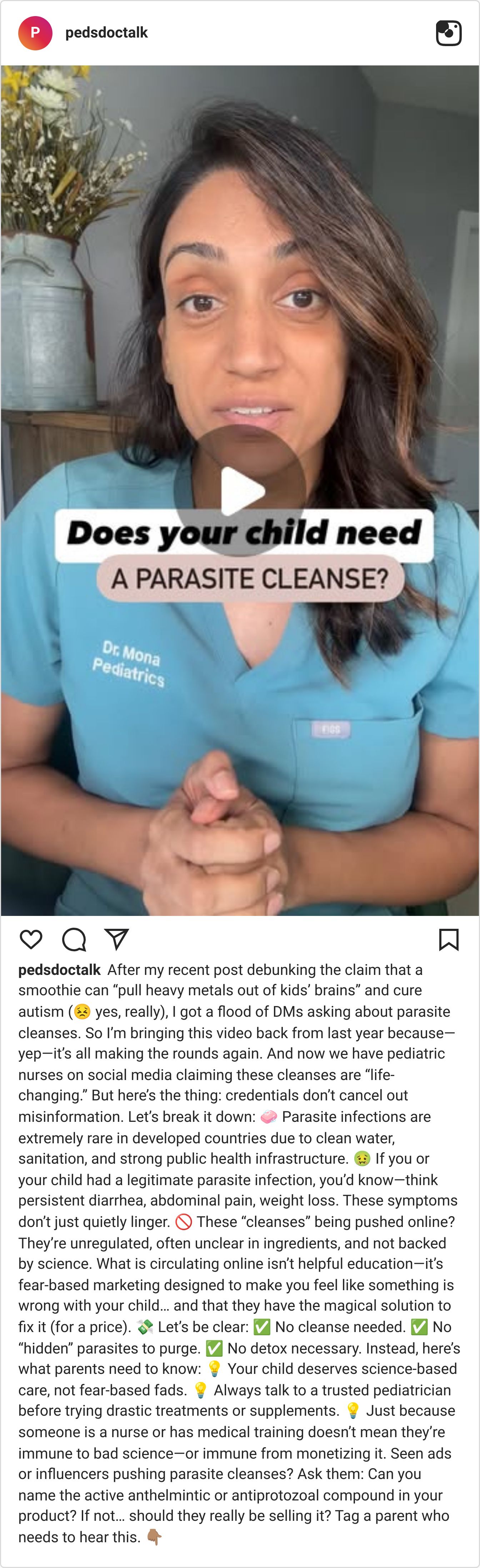
So these ads aren’t a reason to start looking at every picky phase, mood change, or hard day and wondering whether your child has a hidden parasite. What matters is whether there are persistent physical symptoms or a possible exposure, and that’s when it’s worth checking in with your pediatrician. The part I want parents to be most cautious about is marketing that takes ordinary parts of childhood, turns them into something scary, and then sells you the solution.
And with Cyclospora in the news, check out this PedsDocTalk newsletter for what parents need to know about how it spreads, which symptoms to watch for, and when to call your child’s clinician.

My 2 year old had a pretty big meltdown in Target last week. I’ve honestly been thinking about it a lot. It caught me off guard. I tried to hold my boundary, stay calm, everything. But it’s really hard when it feels like so many people are staring and they were. I wasn’t sure if there are any tricks for this or honestly when do you just have to leave?...
A public tantrum can feel completely different from one at home because you’re not only managing your child’s emotions. You’re also aware of everyone around you, and that can make you feel like you need to stop the crying faster, explain more, or prove that you’re handling it well. I’d separate those two things. Your child was having a tantrum in Target, and the people staring were adding pressure to you. The tantrum itself didn’t require a different response just because it happened in public.
A few things can help:
Prepare for the predictable triggers. Hunger, fatigue, boredom, and overstimulation can all lower a toddler’s ability to cope. A snack, a familiar toy, or a shorter trip can help, but preparation won’t prevent every meltdown. Toddlers aren’t a test you can study for and ace.
Keep your response simple. Get close, name what happened, and hold the boundary: “You really wanted that toy, and we’re not buying it today. You can sit in the cart or hold my hand.” A toddler mid-meltdown can't process a lecture about being quiet or what strangers think.
Decide whether staying still works. You don’t automatically have to leave because your child is crying. You can stay if they’re safe and you need to finish what you’re doing. You may choose to leave if they’re hitting, throwing, running off, or the environment is making it harder for either of you to regulate. Leaving isn’t giving in as long as the boundary itself doesn’t change.
Talk about it later. Once they’re calm, keep it brief: “Target was hard today. You were really upset when I said no. Next time, I’ll help you keep your body safe while you’re mad.”
And about the staring: you don’t need to change your parenting to make strangers more comfortable. Some people may look or judge. Your job is still the same one it would be at home: keep your child safe, hold the boundary, and decide whether staying or leaving makes the most sense in that moment.
And because it’s much easier to think through this before the next outing than in the middle of a meltdown, this PedsDocTalk YouTube video walks through why public tantrums happen, how to prepare, and what can help during and after the moment.
Ask Dr. Mona
Ask Dr. Mona all your parenting questions!
Dr. Mona will answer these questions in a future Sunday Morning Q&A email. Chances are if you have a parenting concern or question, another parent can relate. So let's figure this out together!

