
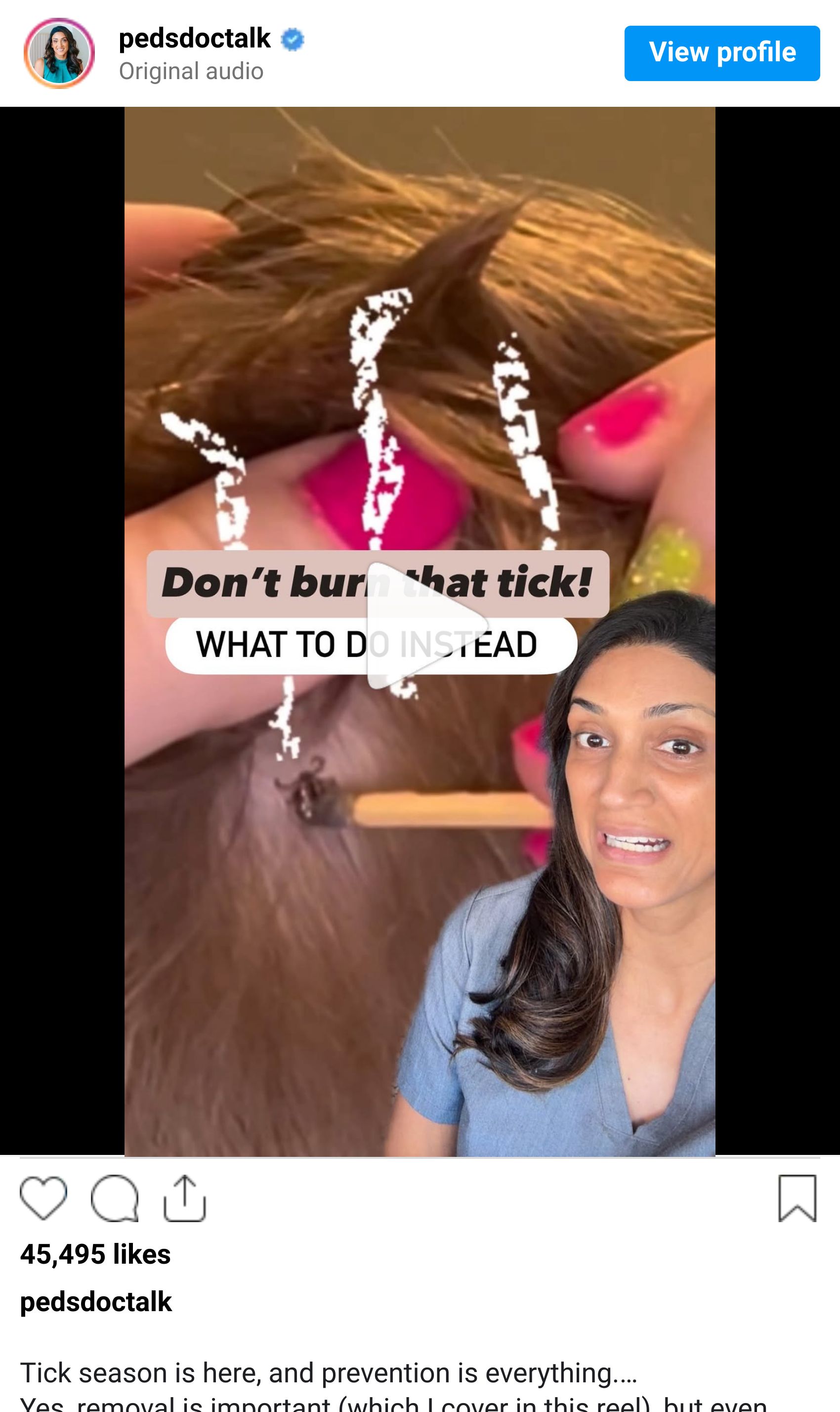
Ticks have been in the news a lot lately, and for good reason.
The CDC estimates that 31 million Americans are bitten by ticks each year, and this season is already off to a busy start. In late April, emergency room visits for tick bites reached their highest rate for that time of year since 2017, according to the CDC’s Tick Bite Data Tracker.

So, yes, this is worth paying attention to.
Not in a “never let your child touch grass again” kind of way. We still want kids outside. We still want them running, exploring, hiking, digging, playing in the yard, and having those sticky, sweaty, nature-filled days that are so good for them.
But with ticks, being aware is key. A few simple steps before and after outdoor play can make a big difference, especially when it comes to preventing bites and removing ticks quickly if you do find one.
How to Prevent Tick Bites Before Kids Head Outside
Ticks tend to live in grassy, brushy, or wooded areas, but that does not mean a family has to be deep in the woods to come across one. They can be in tall grass, leaf piles, trail edges, and yards, especially in areas where deer, rodents, or other animals pass through.
Before hikes, camping, outdoor sports, or play in tall grass, clothing can be the first layer of protection. Long sleeves, long pants, socks, and closed shoes can reduce how much skin is exposed. Light-colored clothing can make it easier to spot a tick crawling before it attaches. And yes, tucking pants into socks may not win any fashion awards, but in tick-heavy areas, it can help.
Repellent is another important piece. The American Academy of Pediatrics and CDC recommend EPA-registered insect repellents, including ingredients like DEET, picaridin, oil of lemon eucalyptus, or other EPA-registered active ingredients. For children, it is important to follow the label, use only what is needed on exposed skin and clothing, avoid applying repellent to hands, eyes, mouth or broken skin. One age-related note worth knowing: oil of lemon eucalyptus and para-menthane-diol (PMD) should not be used on children under 3 years old.
For ticks specifically, 0.5% permethrin can be especially helpful for clothing and gear, but it should not be applied directly to skin. Think shoes, socks, pants, backpacks, tents, or other outdoor gear in areas where ticks are common.
I also want to be real about the “natural” options, because I know many families prefer them when possible. Some plant-based products may offer short-term protection, but many natural repellents have not been approved by the EPA for effectiveness. In areas where Lyme disease or other tick-borne illnesses are a concern, using an EPA-registered repellent is genuinely the more reliable choice.
If you are unsure which repellent is the best fit for your family, the EPA has a search tool that can help you find an option based on the insect you want to protect against, how long you need protection, and the active ingredient you prefer.
What to Do After Being Outside?
After outdoor play, a quick tick check is one of the easiest ways to stay ahead of bites. This is especially helpful after hikes, camping, outdoor sports, time in tall grass, wooded areas, brush, leaf piles, or even backyards in tick-heavy areas.
A bath or shower within a couple of hours of coming inside is a great place to start. It may help wash off ticks that haven't attached yet, and it gives you a natural window to check your child's skin while you're already getting them cleaned up. There’s always a lot of debate on IF kids need baths and showers every day, and of course, from a hygiene perspective, it’s not required if they’re not sweaty. BUT, baths and showers can give us intel and a natural moment to do a thorough check.
Ticks like warm, hidden spots, so check the areas that are easy to miss. Look along the scalp and hairline, behind the ears, under the arms, around the waistband, inside the belly button, between the legs, behind the knees, between the toes, and around sock lines. For babies and younger kids, this can simply become part of the bath or pajama routine. For older kids, you can teach them the “sneaky spots” to check on their own, while still helping with areas like the scalp or back.
Clothing and gear are worth a quick look too. Ticks can hitch a ride on shoes, socks, pants, jackets, backpacks, picnic blankets, or sports gear. If clothes are dry, the CDC recommends putting them in the dryer on high heat for about 10 minutes to kill ticks. If the clothes are damp or need to be washed first, they may need more time in the dryer afterward.
And listen, this does not mean you need to inspect your child like they just returned from a jungle expedition every time they step outside. But after higher-risk outdoor play, a quick routine can help: bath, body check, clothes check, done. It is one of those small habits that can become second nature during tick season.
How to Remove a Tick Safely
If you find a tick attached, take a breath first. I know it can feel very unsettling, especially when it is on your child, but removing it quickly and safely is the most important next step.
Here’s what to do:
Use fine-tipped tweezers or the Bug Bite Thing Tick Remover Tool.
Grab the tick as close to the skin as you can.
Pull upward with steady, even pressure.
Try not to twist, squeeze, or jerk the tick.
After it is removed, clean the bite area and your hands with soap and water or rubbing alcohol.
If you can, take a clear picture of the tick so you can identify it later if needed.
Dispose of a live tick by placing it in a sealed container, wrapping it tightly in tape, flushing it, or putting it in alcohol. Do not crush it with your fingers.
Write down the date you found it and where your child may have picked it up.

What to skip:
No burning, petroleum jelly, or essential oils, and don't wait for it to back out on its own. None of these work, and some can make removal harder.
A quick note because I know this comes up often. Testing the tick itself is generally not recommended. A positive tick test does not necessarily mean your child was infected, and a negative test can be falsely reassuring. What matters more is watching your child for symptoms and calling your clinician if concerns come up.
Tick Bite Symptoms and Lyme Disease
Most tick bites do not lead to illness, so finding a tick does not automatically mean your child is going to get sick. But after a bite, it is worth keeping an eye on your child over the next few days to few weeks.
Lyme disease is usually the tick-borne illness parents hear about most, and understandably so. It is spread by infected blacklegged ticks, often called deer ticks, and it is more common in certain parts of the country. Not every tick carries Lyme, and not every tick bite leads to Lyme disease, but this is one of the reasons quick removal and symptom watching are so helpful.
This CDC map of reported Lyme disease cases in 2023 is a good visual reminder that risk is not evenly spread across the country. Reported cases are especially concentrated in the Northeast, Mid-Atlantic, and Upper Midwest, though ticks and tick-borne illnesses can still show up in other regions. This is why it helps to know what is common where you live or where you are traveling, instead of assuming every tick bite carries the same level of risk.

Early symptoms can sometimes look like a regular virus at first, which can make things tricky. After a known or possible tick bite, watch for:
Fever or chills
Headache
Fatigue or acting more wiped out than usual
Muscle aches or joint pain
Swollen lymph nodes
A new or expanding rash
Joint swelling
Stiff neck
Facial drooping or weakness
The Lyme rash is something parents ask about often. Many people picture the classic bullseye rash, but it does not always look that way. It may be round or oval, it may slowly expand, and it may not be itchy or painful. It can also show up days to weeks after the bite, so if you notice a rash that is spreading, looks unusual, or appears along with fever, fatigue, headache, or body aches, call your child’s clinician.
I would also call if the tick may have been attached for a long time, if your child develops symptoms after a known or possible bite, or you live in or recently traveled to an area where Lyme disease is common and you are not sure what to do next.
In some higher-risk situations, a clinician may consider a preventive dose of antibiotics after a tick bite. That depends on things like the type of tick, where the bite happened, how long it was attached, and how recently it was removed. You do not need to figure all of that out alone, which is why a photo of the tick and a quick note about timing can be helpful.
Lyme disease can feel scary because there are so many stories and questions around it, but the practical steps are still pretty clear: remove ticks quickly, watch for symptoms, and reach out if something feels off.
Final Thoughts on Tick Prevention
Ticks are not exactly the part of being outside any of us want to think about. They are tiny, easy to miss, and yes, a little gross. So if finding one on your child makes your stomach drop for a second, I get it.
But this is one of those situations where a little awareness really does help.
We still want kids outside running through the yard, hiking with the family, playing sports, collecting sticks, digging in the dirt, and having those full-body nature days that end with messy shoes and a much-needed bath. We just also want tick prevention to be part of the rhythm when it makes sense.
Think about where your child is going, use repellent and protective clothing when the setting calls for it, check the easy-to-miss spots when they come back in, and remove a tick quickly if you find one. Then, over the next few weeks, keep an eye out for symptoms and call your clinician if something feels off.
That is really the heart of it: stay aware, act quickly, and keep enjoying the outdoors.
If you enjoyed this newsletter, I’d love for you to share it with others! Screenshot, share, and tag me @pedsdoctalk so more parents can join the community and get in on the amazing conversations we're having here. Thank you for helping spread the word!
On The Podcast

Parents often want to talk to their kids about puberty and periods, but many don’t know where to start. In this episode, I’m joined by pediatric and adolescent gynecologist Dr. Charis Chambers to talk about how we can change the way families approach these conversations. From stigma and misinformation to the fear of saying the wrong thing, we break down why avoiding these discussions can leave kids confused, scared, or learning from the wrong sources.
Many parents worry when their child seems shy. But is it actually shyness, or something more?
In this episode, we unpack the difference between a “slow to warm” temperament and an anxiety disorder. We talk about why labeling kids as shy can unintentionally limit them, how social expectations play a role, and what supportive parenting really looks like in those hesitant moments.
Ask Dr. Mona
An opportunity for YOU to ask Dr. Mona your parenting questions!
Dr. Mona will answer these questions in a future Sunday Morning Q&A email. Chances are if you have a parenting concern or question, another parent can relate. So let's figure this out together!

